In today’s world, reliable power on the go is essential—whether you’re camping in the wilderness, tailgating at a game, RVing across the country, or preparing for unexpected home outages. Traditional generators are loud, bulky, and produce “dirty” power that can damage sensitive electronics like laptops, smartphones, and medical devices. That’s where portable inverter generators shine. These compact powerhouses deliver clean, stable electricity with total harmonic distortion (THD) under 3%, operate at whisper-quiet levels as low as 48-60 dB, and offer unmatched fuel efficiency.
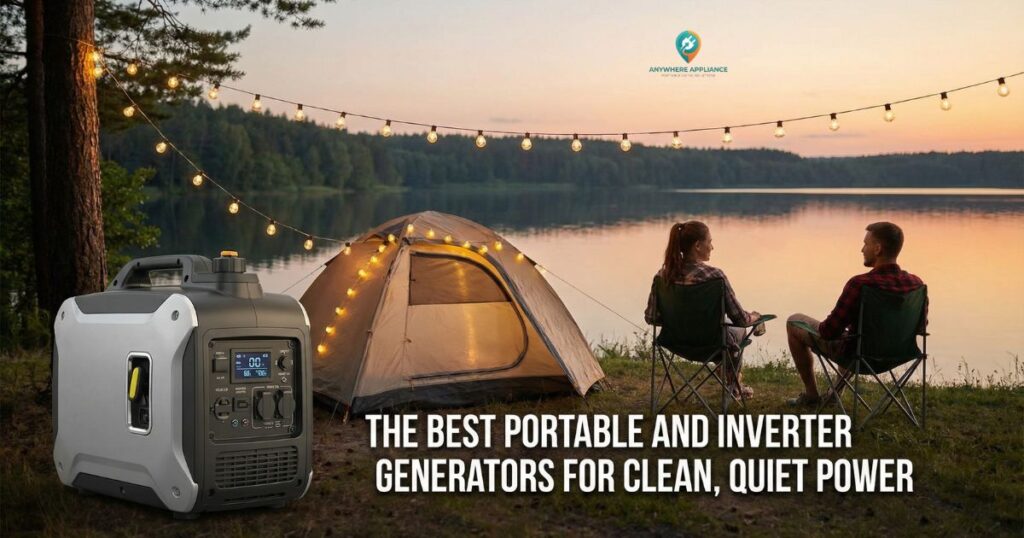
As of 2026, inverter technology has advanced dramatically. Top models now feature dual-fuel capability (gasoline or propane), CO detectors for safety, parallel operation for doubled power, and app connectivity. In this comprehensive 2026 guide, we review the absolute best options based on independent lab tests from Wirecutter, Popular Mechanics, and real-world performance data. We’ll break down how they work, key buying factors, and our top picks to help you choose the perfect clean, quiet generator.
- How Inverter Generators Deliver Clean, Quiet Power?
- Key Factors to Consider in 2026
- Top Portable Inverter Generators of 2026
- Best Overall: Westinghouse iGen5000DFc 3900-Watt Dual-Fuel Inverter
- Best Ultra-Portable: Honda EU2200i 2200-Watt Companion Inverter
- Best Value Dual-Fuel: Champion 4500-Watt Dual-Fuel Inverter
- Best for Sensitive Electronics: Generac iQ3800 Dual-Fuel Inverter
- Best Lightweight Budget Option: WEN 3600-Watt Dual-Fuel Inverter
- Premium Upgrade: Honda U7000iSNAND 7000-Watt Inverter
- You may also like:
- Final Thoughts: Power Up Quietly and Cleanly in 2026
How Inverter Generators Deliver Clean, Quiet Power?
The Science Behind Clean Sine Wave Power
Unlike conventional generators that produce raw AC power with high THD (often 20%+), inverter generators first convert AC to DC, then invert it back to a precise 120V/60Hz sine wave. This results in ultra-clean power safe for CPUs, TVs, CPAP machines, and smartphones. In 2026 tests, leading models maintain frequency stability within 0.1 Hz and voltage within 1-2V under varying loads.
Why They’re So Much Quieter?
Inverter units use variable-speed engines that throttle down in Eco mode when demand is low, combined with fully enclosed “closed-frame” designs that absorb sound. Noise levels typically range 52-65 dB at 25 feet—comparable to a quiet conversation or dishwasher—versus 70-80+ dB for open-frame models. This makes them ideal for campgrounds with strict noise rules.
Fuel Efficiency and Runtime Advantages
Smart inverters sip fuel only as needed, often doubling runtime compared to traditional units. Many now run 10-18+ hours at 25% load on a single tank or propane cylinder.
Key Factors to Consider in 2026
Power Output Needs
Calculate your wattage: Add running watts of essentials (fridge 700W, AC 1500W, lights 100W) plus 20% surge buffer. Small inverters (2000-4000W) suit camping/RV; mid-size (5000W+) handle home backup.
Noise Levels and Portability
Look for sub-60 dB ratings and weights under 100 lbs for true portability. Wheels and folding handles are game-changers.
Fuel Flexibility
Dual-fuel (gas/propane) models dominate 2026 lineups. Propane stores indefinitely and burns cleaner; gas offers slightly more power.
Runtime, Safety, and Features
Prioritize CO shutoff sensors (now mandatory on most), USB ports, RV outlets, parallel kits, and digital displays. Electric/remote start is a bonus for convenience.
Price vs. Value
Entry-level inverters start around $500-800; premium dual-fuel units run $900-1500. Expect 3-5 year warranties from trusted brands like Honda, Westinghouse, Generac, and Champion.
Parallel Capability
Many models link two identical units for nearly double the power without sacrificing quietness or cleanliness.
Top Portable Inverter Generators of 2026
Best Overall: Westinghouse iGen5000DFc 3900-Watt Dual-Fuel Inverter
Wirecutter’s top pick for good reason. This closed-frame beast delivers 3900 running watts (5000 starting) on gas or 3500/4500 on propane. At just 52 dB, it’s library-quiet, and its 18-hour runtime at 25% load on gasoline makes it perfect for extended outages or multi-day camping. Weighing a little over 100 lbs with wheels, it’s surprisingly portable. Features include remote start, LED fuel/power displays, CO detector, and RV-ready 30A outlet.
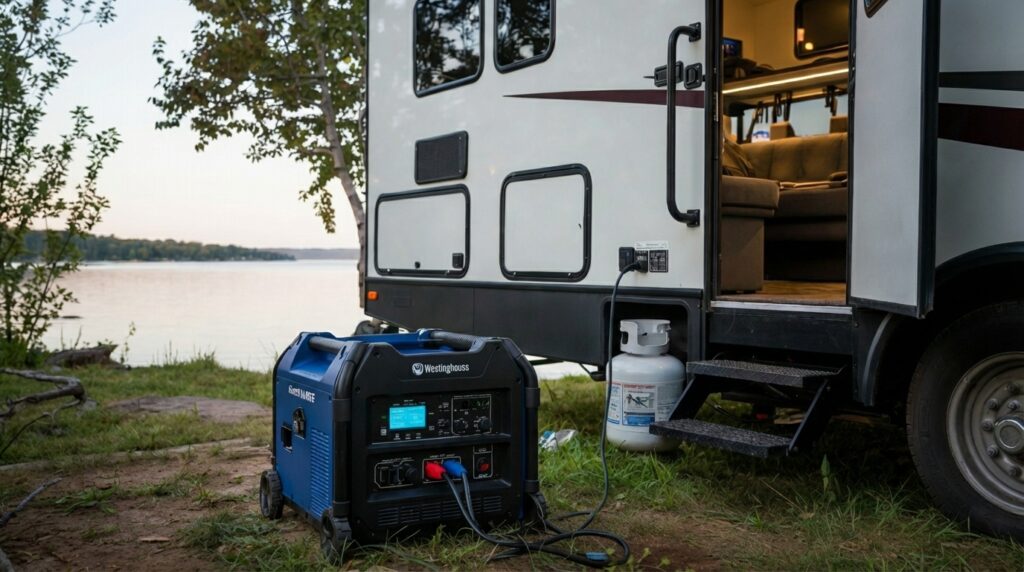
Pros: Exceptional runtime, dual-fuel versatility, reliable for sensitive electronics. Cons: Slightly heavier than ultra-portable models; not CARB-compliant in all states. Price: Around $1,000. Ideal for RVers and homeowners needing versatile backup.
Best Ultra-Portable: Honda EU2200i 2200-Watt Companion Inverter
Honda remains the gold standard for reliability. This 48-lb unit outputs 1800 running/2200 starting watts with incredibly clean power and noise as low as 59 dB (tested at 25 ft). Its Eco mode extends runtime dramatically, and parallel capability lets you link two for 4400W. Popular Mechanics testers praised its smooth sine wave and compact size—perfect for tailgating, camping, or powering a fridge during outages.
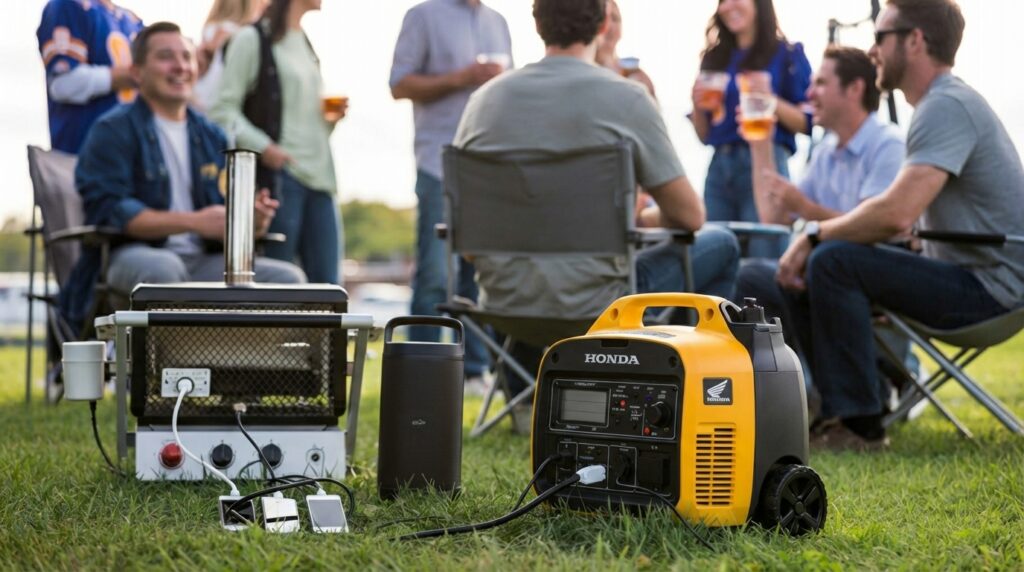
Pros: Legendary durability, super lightweight, parallel-ready. Cons: Gas-only; smaller capacity limits whole-home use. Price: $1,000-$1,200. The go-to for campers and light backup.
Best Value Dual-Fuel: Champion 4500-Watt Dual-Fuel Inverter
Champion’s 4500W model (3500 running watts gas) punches above its price with 61 dB quiet operation and up to 21 hours on propane. Popular Mechanics highlighted its RV-ready 30A plug and easy dual-fuel switching. At under 100 lbs, it’s easy to transport and delivers clean THD power for electronics or small appliances.
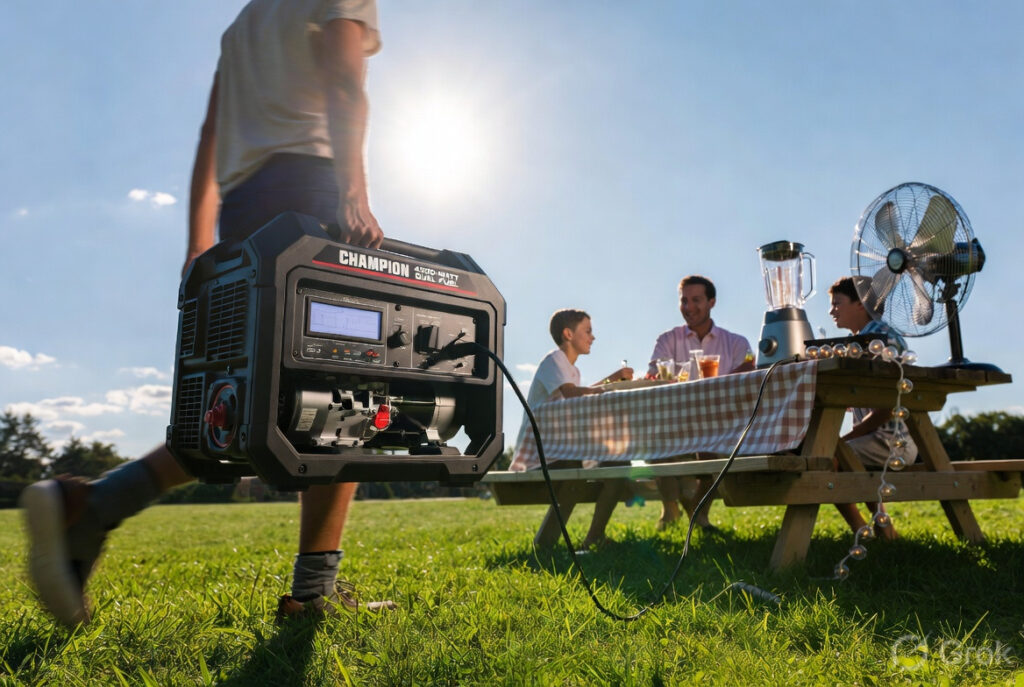
Pros: Affordable, long propane runtime, versatile outlets. Cons: Smaller gas tank requires more frequent refills. Price: $800-$1,000. Outstanding bang for the buck.
Best for Sensitive Electronics: Generac iQ3800 Dual-Fuel Inverter
Generac’s 3800W inverter (3000 running watts) earned praise in Popular Mechanics tests for its ultra-clean power (THD <3%) and 61 dB quietness. The LED display shows real-time load, fuel, and hours. Dual-fuel flexibility and electric start make it a favorite for homeowners protecting pricey gear during storms.
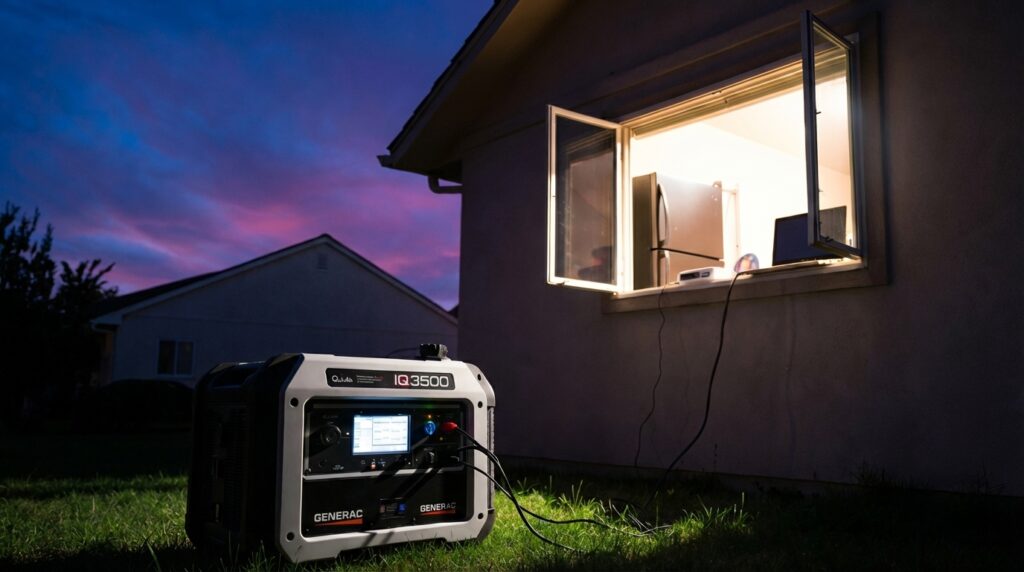
Pros: Excellent display, reliable for delicate electronics. Cons: Slightly pricier than competitors in its class. Price: $900-$1,100.
Best Lightweight Budget Option: WEN 3600-Watt Dual-Fuel Inverter
At only 49 lbs, WEN’s dual-fuel inverter offers 2900 running watts and 65 dB operation—quiet enough for neighbors. Popular Mechanics noted its USB ports and CO sensor make it ideal for beginners. Great runtime on propane and super portable for car camping.
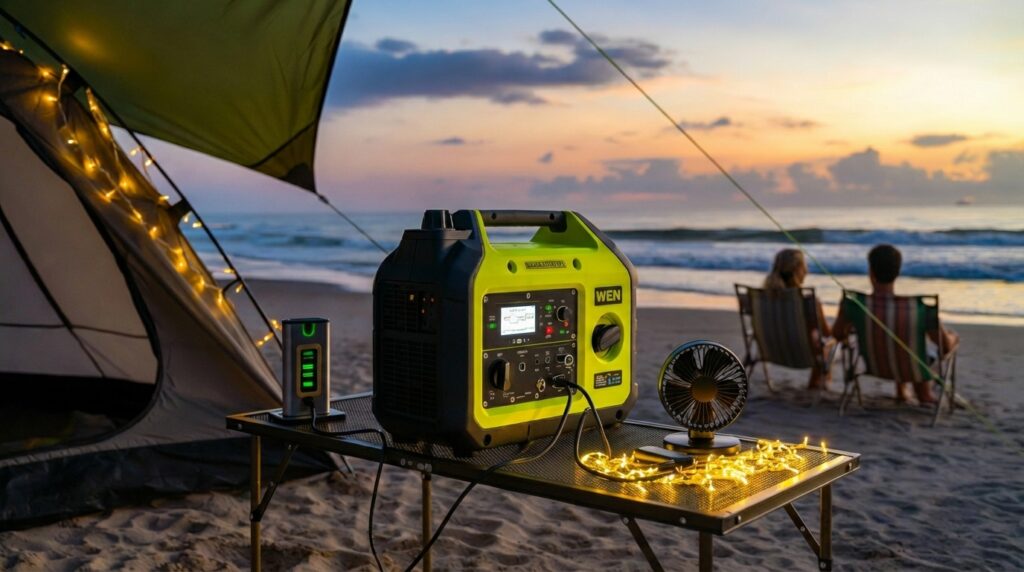
Pros: Extremely light, feature-packed for price. Cons: Shorter gas runtime. Price: $600-$800.
Premium Upgrade: Honda U7000iSNAND 7000-Watt Inverter
For serious power, Honda’s flagship delivers 5500 running/7000 starting watts with Bluetooth monitoring and 52-60 dB noise. Wirecutter’s upgrade pick for larger needs.
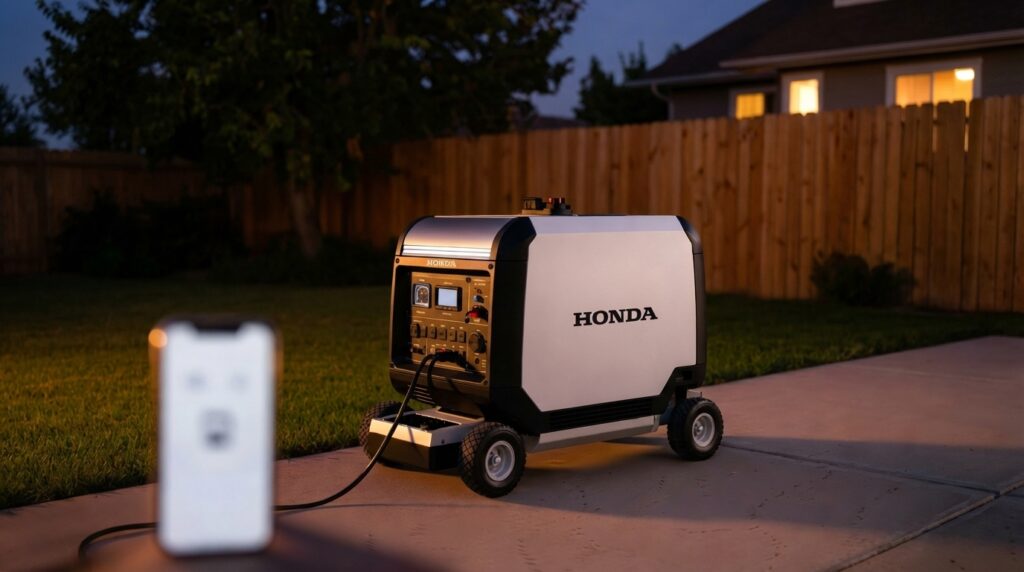
Pros: Massive clean power, app integration, bulletproof build. Cons: Premium price tag. Price: $4,000+.
You may also like:
- The Ultimate Guide to Portable Generators: Finding the Right Power Source for Any Situation
- The Best Dual Fuel and Propane Portable Generators for Maximum Flexibility
- Best Portable Home Generators for Power Outages
Final Thoughts: Power Up Quietly and Cleanly in 2026
Whether you need a featherweight Honda for weekend adventures or a robust Westinghouse for home backup, 2026’s top inverter generators combine silence, efficiency, and electronic-safe power like never before. Always match wattage to your needs, prioritize dual-fuel and CO safety features, and consider parallel kits for scalability.
Invest in a quality inverter today—it’s the smartest way to stay powered without disturbing the peace. Check current pricing and availability on major retailers, and consult local noise ordinances or emissions rules. Stay safe, stay powered, and enjoy the freedom of clean, quiet energy anywhere life takes you.